

Code Violation Properties in Miami? We buy Miami houses for cash.
FL code-enforcement fines accrue daily — often $250+/day per violation — and become liens on the property until paid or settled. We've helped 500+ Florida sellers close in 7–14 days — Miami included.
- $0 commissions or fees
- Close in 7 days — or your date
- No repairs, no cleanout, no showings
No obligation. 24-hour response.
Why code violation properties sellers in Miami call us
Daily fines don't stop until the property is brought into compliance or sold to a buyer who can resolve them. We buy Miami houses regardless of what condition they're in or what situation you're navigating — including code violation properties.
Spanish-speaking owners, Inherited condos, HOA assessments, hurricane damage. We know the Miami-Dade County market and the realities of selling under pressure here. FL code-enforcement fines accrue daily — often $250+/day per violation — and become liens on the property until paid or settled.
If your Florida house has code violations, daily fines, open permits, or a lien you cannot pay off, you do not have to fix any of it before you sell. We buy as-is, resolve the violations after closing or pay the lien off at the table, and you walk away with cash.
- 15+ years buying Florida houses, 500+ closings, BBB A+
- We close on properties with active code-enforcement liens, magistrate fines, and unpermitted structures
- We attend the lien-reduction hearings ourselves after closing — you do not
- We pull, close out, or remove open permits using our own licensed contractors
- 4.9 stars across 87+ Google reviews from Florida sellers
Why Sell to Byron with Code Violations
When a code-enforcement officer staples a Notice of Violation to your door, you have weeks before fines start, and the meter does not stop until the violation is cured. Most homeowners do not have the cash to permit, engineer, and rebuild an unpermitted Florida room, and a traditional sale is not realistic once a lien hits the title. Selling to Byron solves the entire stack at once.
- No repairs, no permits, no engineer reports. You keep your money. We absorb the cure cost on our side after we own the property. Whether the cited work is an unpermitted bedroom conversion in Allapattah or a derelict pool cage in Lehigh Acres, we close as it sits.
- We pay off code-enforcement liens at closing. If the city has already recorded a lien under Chapter 162 of the Florida Statutes, we coordinate the payoff with the city attorney's office and wire it from your sale proceeds at the title table. You see the math on the closing statement before you sign.
- We negotiate magistrate liens down after we own it. Most Florida cities run a lien-reduction or mitigation hearing once a violation is cured. A $60,000 accrued fine often settles for $5,000 to $15,000 once we have fixed the problem. We eat that risk. You do not need to attend a hearing.
- We close in 7 to 14 days. Conventional buyers cannot get a mortgage on a property with open permits or unpermitted living area, and that is why your house has been sitting. Cash erases the financing problem entirely.
- We handle unsafe-structure and demolition orders. A red tag does not scare us. We have closed on condemned houses in Liberty City, fire-damaged duplexes in Tampa Heights, and fully derelict shells in Lehigh Acres.
- You stop being the respondent. Once title transfers, the city's case file moves to us. The next inspection notice goes to our address, not yours.
- No fees, no commissions, no closing costs. What we offer is what you net, minus any payoffs you owe — which the title company itemizes line by line.
How It Works When Your House Has Violations
Three steps, no surprise pivots.
- Tell us what the city said. Email or text us the Notice of Violation, the Notice of Hearing, the Special Magistrate order, or whatever paper the inspector handed you. If you do not have the paper, give us the address and we pull it from the county code-enforcement portal ourselves. You do not need to know the citation chapter or section.
- We make a written cash offer in 24 hours. We back the violation cure cost out of our offer the way any honest cash buyer would, but we show you the math. You see what the lien payoff is, what we estimate to cure, and what you net at closing — on one sheet of paper.
- We close in 7 to 14 days at a Florida title company. Title runs the lien search, pulls payoff figures from the city, and we wire funds. After closing, our team handles every magistrate hearing, every re-inspection, every retroactive permit, and every demolition order tied to that property.
Florida Code-Enforcement Basics — What Chapter 162 Actually Says
Florida's local-government code-enforcement framework is set by Chapter 162 of the Florida Statutes (the Local Government Code Enforcement Boards Act). Every city and county in Florida draws its enforcement authority from this chapter, and the process looks similar everywhere: an inspector identifies a violation, issues a Notice of Violation with a cure deadline, and if the homeowner does not comply, the case moves to a Special Magistrate or a Code Enforcement Board hearing where fines start accruing.
The statute caps daily fines at $250 per day per violation for a first offense and $500 per day for a repeat violation, and lets municipalities recover the cost of repair where the city itself does the work. Once the magistrate's order is recorded in the county's official records, it becomes a lien against the property and against any other real property the cited owner holds in that county. That lien is what blocks your sale at the title commitment stage. It is also what gets negotiated down at the lien-mitigation hearing once the violation is cured — and that is exactly the leverage we use after we own the property.
A few practical points sellers should know:
- Daily fines accrue from the cure deadline, not from the date you got the notice. If you missed a 30-day cure window 18 months ago, the lien has been growing at $250 a day the entire time.
- The lien attaches to the property, but the person cited also remains on the hook until the case is closed. Selling to a buyer who actually resolves the case is what gets you off the file — selling to someone who does not is how former owners get sued years later.
- Cities have wide discretion to reduce liens at a mitigation hearing once compliance is achieved. Miami, Hialeah, Tampa, Jacksonville, Orlando, and most other Florida municipalities run this hearing as a matter of routine. We attend it.
- Florida cities can foreclose on code-enforcement liens like any other lien once the lien plus interest exceeds a threshold (often $15,000 to $25,000 depending on local ordinance). If you are getting close to that number, the city's lien-foreclosure division is the next call you do not want.
The Most Common Florida Code Violations We Buy
We have closed on every flavor of code violation Florida cities cite. Most fall into these categories.
- Unpermitted additions. The classic Florida room enclosed off the back patio without a permit. The carport closed in and converted to a master bedroom. The garage turned into a studio. The "in-law suite" added behind the main house in Hialeah, Allapattah, or Liberty City — sometimes with its own kitchen and bathroom, almost always with no permit. Cities cite these for square-footage discrepancy with the tax roll, for unpermitted electrical and plumbing, and for life-safety code failures.
- Open or expired permits. A roof permit pulled in 2019 that never got a final inspection. A pool-cage permit that the contractor walked off and never closed. An A/C-replacement permit that expired. Each open permit is a separate violation in most jurisdictions and a hard stop for any conventional buyer.
- Overgrown lawn and lot maintenance. Tampa and Hillsborough County are aggressive on this. Grass over 12 inches, untrimmed hedges blocking sidewalks, and accumulated yard debris all draw $250-a-day citations under city ordinance.
- Derelict vehicles. A car on blocks in the front yard, a boat on a trailer with expired tags, an RV stored against the side of the house. Cited routinely in Miami-Dade, Broward, and Lee County.
- Illegal short-term rental operation. Miami Beach, Anna Maria Island, parts of Orlando and Kissimmee, and the 30A corridor cite unlicensed STR operators heavily. Daily fines are punishing, and the violation persists every day the listing stays live.
- Unsafe structure / red-tagged houses. A roof failure, a leaning carport, fire damage, or a structural-engineer report finding the home unfit for occupancy. Cities can post the property and order demolition. Lenders will not touch this. We will.
- Junked appliances, accumulated trash, and exterior-storage violations. Common after a tenant evicts out or after probate when the heirs live out of state and cannot clean the property.
- Setback, fence-height, and accessory-structure violations. A shed too close to the property line, a fence too tall under the local zoning code, a chicken coop in a single-family district. Small individually, but they compound when paired with another open file.
If your situation is on this list, or close to it, the path forward is the same: cash offer, fast close, we resolve the file.
How Code-Enforcement Liens Block a Normal Sale
A code-enforcement lien is recorded in the county's official records under the property's legal description. Title companies pull those records as part of the title commitment, and the lien shows up as a Schedule B exception. Until the lien is paid in full, satisfied by a recorded release, or insured over by special endorsement, the title company will not issue a clean policy — which means no conventional, FHA, VA, or portfolio lender will fund on the property.
This is why the listing keeps falling out of contract. It is not the buyers, it is the title commitment. Cash sales solve this by removing the lender from the equation entirely; we wire the payoff to the city out of your sale proceeds, the city records a satisfaction, and the lien clears at closing. Where the lien exceeds the property's market value (more common than you would think, especially with $500-a-day repeat violations on a $90,000 Lehigh Acres lot), we offer subject to a lien-mitigation hearing — meaning we close, we cure, we attend the hearing, and we eat the haircut.
Code-Enforcement Magistrate Hearings — What Actually Happens
Most Florida cities use a Special Magistrate (an attorney appointed by the city, not a judge) to hear code cases instead of a full Code Enforcement Board. The hearing happens at city hall on a published calendar, and it goes in three flavors.
The first appearance hearing is where the magistrate finds the violation and orders a compliance date. If you miss the compliance date, fines start.
The non-compliance / fine-imposition hearing is where the magistrate confirms the daily fine has accrued and authorizes recording of the lien. This is the hearing that turns a citation into a recorded lien on your title.
The lien-mitigation / lien-reduction hearing is the one that matters once you have already missed the first two. The magistrate will entertain a motion to reduce the lien to a fraction of face value if compliance has been achieved, the property has changed hands to a good-faith buyer, and the new owner asks for relief. Reductions of 80% to 95% are routine across Miami-Dade, Hillsborough, Broward, and Duval cities once the underlying violation is gone.
We attend these hearings as the new owner of record. You do not show up, you do not testify, you do not negotiate. That is the value we offer beyond just buying the house.
Real Florida Examples
Code-violation problems look different in different parts of the state. The pattern is the same; the trigger varies.
- Liberty City and Allapattah, Miami. Unpermitted in-law suites added behind single-family houses to house extended family or generate rental income. Miami code enforcement runs heavy in these neighborhoods, and the daily fines stack quickly when an absentee landlord ignores the notice. We close on these every month.
- Hialeah. Unpermitted bedroom conversions, second-kitchen additions, and unpermitted carport-to-living-space conversions are everywhere in 33010, 33012, and 33013. The city's code-enforcement division is one of the most active in Miami-Dade.
- Lehigh Acres, Lee County. Derelict, vacant, and partially demolished structures in the 33971 / 33972 / 33974 ZIPs — many leftover from the 2008 crash and never finished, others damaged in Hurricane Ian and never repaired. Lee County code enforcement issues unsafe-structure orders regularly, and we have a standing buy-list for these lots.
- Tampa and unincorporated Hillsborough County. Overgrowth violations, inoperable-vehicle citations, and accessory-structure violations driven by the city's aggressive code-officer corps. Common pairing: a probate house sitting empty after a parent passes, the heirs live out of state, the lawn turns into a jungle, and the citations stack while no one opens the mail.
- Jacksonville and Duval County. Open-permit issues on roof replacements after Irma and Matthew that were never finalized, plus a steady stream of unsafe-structure orders in older parts of the urban core.
- Miami Gardens. A mix of unpermitted additions and lot-maintenance citations, often on rental properties owned by tired landlords. Same pattern as North Miami and Opa-locka — we close as-is and resolve the file ourselves.
What Sets Byron Apart on Code-Violation Deals
There are other Florida cash buyers who say they buy "as-is." Most of them quote you, then renegotiate hard once their inspector flags the unpermitted work. We work differently.
- We tell you the lien math up front. You see the city's payoff figure, our cure-cost estimate, and your net to seller on one sheet — before you sign anything.
- We do not retrade after inspection. Our offer accounts for code issues at the offer stage. If you disclose the violation, the offer holds.
- We have an in-house permit-and-cure team. Licensed contractors on retainer in Miami-Dade, Broward, Hillsborough, Pinellas, Lee, Duval, Orange, and Polk counties. We are the ones who close out your open permits, not a subcontractor we pray will show up.
- We attend every hearing ourselves. The lien-mitigation hearing, the unsafe-structure hearing, the demo-permit appeal — all of it. You do not need to drive to city hall.
- We have closed on properties with $80,000+ accrued fines. We have the relationships at the city attorney's office and the magistrate's office to work these down. Most retail wholesalers do not.
Florida-Specific Legal and Practical Hooks
A few statutory points worth knowing while you decide.
Chapter 162 governs the procedure, but local ordinance governs the substance. Each Florida city writes its own zoning code, building code amendments, lot-maintenance ordinance, and accessory-structure rules. That is why a 7-foot fence is fine in one Miami-Dade municipality and cited in the next. We work in the actual ordinance for your jurisdiction; we do not assume.
Sellers are required to disclose known material defects. Under Johnson v. Davis (Florida Supreme Court, 1985), residential sellers must disclose facts materially affecting property value that are not readily observable. A recorded code-enforcement lien is recorded and discoverable, but unpermitted work behind a wall often is not — and that creates real liability for the seller in a traditional sale. Selling to us as-is, with full disclosure, eliminates that exposure.
Open permits do not survive sale automatically. In most Florida jurisdictions, a permit pulled in the prior owner's name remains in their name until closed out or transferred. We file the transfer paperwork after closing so the open permit moves to us, not lingers under your name.
Unsafe-structure cases run on a separate track from regular code-enforcement. Under most Florida building-code adoptions, the building official has independent authority to declare a structure unsafe, post the building, and order demolition without going through the Special Magistrate at all. If the city has already posted your house — yellow-tagged or red-tagged — the timeline to a demo order tightens considerably. We have closed on yellow-tagged houses in 9 days. We have also closed on properties already under a recorded demo order, where we accept the demo obligation as part of taking title.
A pending building-permit application does not pause fine accrual. This catches sellers off guard. Just because you have applied for the after-the-fact permit does not mean the daily fine stops; the fine stops when the permit is issued and the work passes final inspection. That is why most sellers realize they cannot afford the runway and choose to sell instead. Cash closing collapses the timeline from 6-12 months of cure work to 7-14 days of paperwork.
The city's lien-foreclosure division is the next step you do not want. Once a code-enforcement lien crosses a local-ordinance threshold (often $15,000 to $50,000), most large Florida municipalities refer the file to their lien-foreclosure division and sue to take the property at auction. Selling before that referral is the cleanest exit.
Ready to Sell Your Florida House with Code Violations?
You have probably been carrying this for months — opening city mail with a knot in your stomach, watching the daily-fine number climb, telling yourself you will get to it next week. You do not have to keep doing that. Tell us the address. Send the notice. We will give you a written cash offer in 24 hours, close in 7 to 14 days, and absorb every code-enforcement headache attached to the property. You walk away with money in the bank and the city's file off your name.
Call Byron at 951-331-3844 or get your offer online. Texting a photo of the Notice of Violation is fine — we will take it from there.
More situations we handle in Miami
If your situation isn't on the list, call us. There's a good chance we've handled it.

Stop Foreclosure
Florida is a judicial-foreclosure state. From lis pendens to final judgment averages 8–12 months — but you only have until the courthouse sale to sell. We close before the sale date.
Learn more
Sell an Inherited House
Florida probate (Ch. 731–735) can take 6–12 months for formal administration. We can sign now and close once Letters of Administration are issued.
Learn moreSell a Probate Property
FL summary administration applies for estates under $75,000 (or 2+ years post-death). We can structure the contract to match your administration type.
Learn more
Sell During Divorce
Florida is an equitable-distribution state under FL Statute Ch. 61. A clean cash sale gives both parties certainty and avoids months of MLS uncertainty.
Learn moreBehind on Property Taxes
FL tax certificates sell every June 1. After 2 years (FL Statute 197), the certificate holder can apply for a tax deed — and your home goes to auction.
Learn moreCode Violation Properties
FL code-enforcement fines accrue daily — often $250+/day per violation — and become liens on the property until paid or settled.
Learn more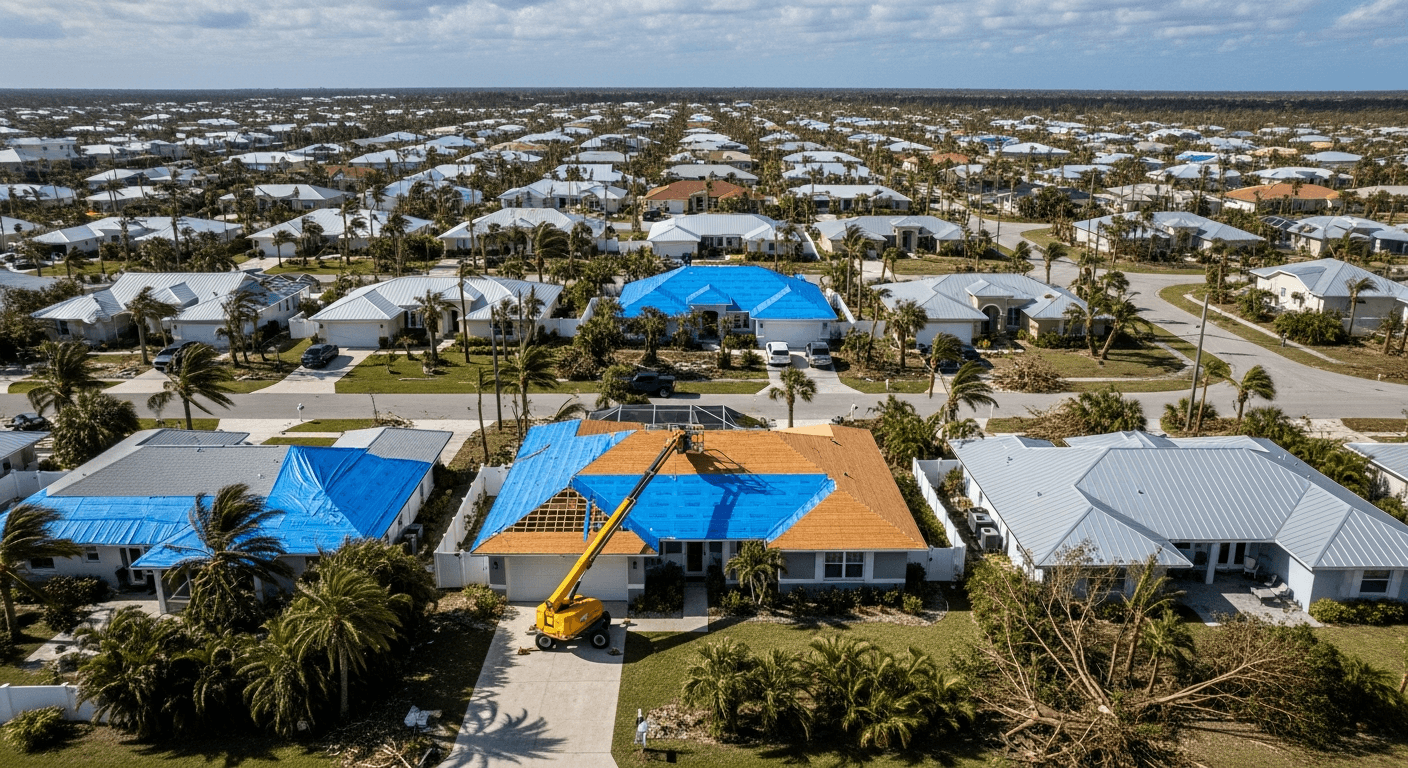
Hurricane-Damaged Houses
Citizens Property Insurance non-renewals and AOB (assignment of benefits) disputes leave thousands of FL homeowners stuck. We close even with open claims.
Learn moreTired Landlord Sale
Florida eviction timelines run 4–8 weeks for non-payment, longer for habitability disputes. We buy occupied — you walk away clean.
Learn moreMold or Water Damage
FL humidity makes mold issues compound fast. Most retail buyers walk away the moment mold is disclosed. We don't.
Learn moreWhat it sounds like to actually sell
“I live in Texas now. Byron's team flew through everything by email and FaceTime. We signed remote, the title company shipped me a check. I never even had to fly to Miami.”
Composite stories from real Florida closings. Names changed for privacy.
Miami code violations sellers ask…
Selling a code violations house in Miami?
Get your fair cash offer in 24 hours. No obligation.
Call (951) 331-3844