


Sell During Divorce in Miami? We buy Miami houses for cash.
Florida is an equitable-distribution state under FL Statute Ch. 61. A clean cash sale gives both parties certainty and avoids months of MLS uncertainty. We've helped 500+ Florida sellers close in 7–14 days — Miami included.
- $0 commissions or fees
- Close in 7 days — or your date
- No repairs, no cleanout, no showings
No obligation. 24-hour response.
Why sell during divorce sellers in Miami call us
We can close on either spouse's preferred timeline — including post-decree. We buy Miami houses regardless of what condition they're in or what situation you're navigating — including sell during divorce.
Spanish-speaking owners, Inherited condos, HOA assessments, hurricane damage. We know the Miami-Dade County market and the realities of selling under pressure here. Florida is an equitable-distribution state under FL Statute Ch. 61. A clean cash sale gives both parties certainty and avoids months of MLS uncertainty.
The marital home is the biggest asset in the case and usually the biggest delay. Let us make it the easy part. Discreet cash offer, attorney-friendly close, escrow split exactly the way your MSA writes it — no MLS sign in your yard, no showings on the weekends you have the kids.
- 15 years of Florida real estate, 500+ closings statewide
- BBB A+ accredited, 4.9 stars from 87+ verified Google reviews
- We close at your divorce attorney's preferred title company
- Discreet by default — no signage, no social posts, no public listing
- Family-owned, Byron answers the phone himself: 951-331-3844
Why Selling Mid-Divorce Is Different
A regular Florida sale has one decision-maker. A divorce sale has two parties who often disagree about the price, the timing, the agent, the showings, and what counts as "ready." Then layer on attorneys, possibly a judge, possibly a guardian ad litem if there are minor kids, possibly a lis pendens recorded under §48.23 that freezes title, possibly an exclusive-use order under §61.077 that keeps one spouse in the home until the kids age out.
That's why traditional listings during dissolution drag on for nine, twelve, sometimes eighteen months. Every showing has to be coordinated through two households. Every counteroffer goes through two lawyers. Every inspection objection becomes another fight. The house sits, the carrying costs stack, the equity erodes, and the court eventually orders sale anyway — usually at a worse price than the original list because the home now reads as "stale" to retail buyers.
A cash sale collapses that timeline. One number, one closing date, no contingencies, no showings, no staging. You're not asking a buyer to fall in love with the kitchen — you're asking your spouse and your attorneys to agree on a number that's already on paper. That's the only fight left.
Florida Is Equitable Distribution, Not Community Property
Couples moving here from California, Texas, Arizona, or Washington often assume Florida splits everything 50/50 because that's how community-property states work. It doesn't. Florida is an equitable-distribution state under §61.075, F.S. — marital assets are presumed to split equally, but the court can deviate based on duration of the marriage, economic circumstances of each party, contribution to the marriage, intentional dissipation of assets, and a half-dozen other statutory factors.
What that means for your house: even if the deed only says one name, even if only one spouse made the down payment, even if only one paycheck covered the mortgage — if the home was acquired during the marriage and used as the marital residence, Florida treats it as a marital asset, full stop. The court divides the equity, not the title. Pre-marital homes can become marital through commingling (joint mortgage payments, joint improvements, refinances into both names), and the burden shifts to the spouse claiming "non-marital" to trace it.
We don't make that determination — your attorneys and the judge do. What we do is offer a clean number on the home itself, so when the court runs the equitable-distribution math, the house line item is a known, liquid figure instead of a guess.
Marital vs Non-Marital — The Deed Doesn't Decide
A few patterns we see often in Florida dissolutions:
Pattern 1 — Home bought together during marriage, both names on deed. Almost always 100% marital. Equity splits per the final judgment.
Pattern 2 — One spouse owned it before the marriage, kept their name only. Pre-marital portion is non-marital. But every dollar of mortgage paydown during the marriage, every renovation paid from joint funds, and any appreciation tied to that paydown is generally marital. The non-marital base survives; the marital growth on top divides.
Pattern 3 — Inherited home, one spouse only. Inheritances are non-marital under §61.075(6) — unless it got commingled. A separate account that received the inheritance, never co-mingled, never used for joint expenses, stays non-marital. An inheritance deposited into the joint checking account that paid the mortgage? Almost always commingled.
Pattern 4 — Tenants by the entirety. Florida-married couples who title together get tenants-by-the-entirety automatically. That ownership form dissolves into tenants-in-common the moment the divorce is final. While the marriage is intact, neither spouse can convey alone — both must sign.
Pattern 5 — Homestead. Article X §4 of the Florida Constitution requires both spouses to sign on any conveyance of homestead property, even if only one is on the deed. A deed signed by one spouse alone is void as to homestead. This is why every legitimate cash offer on a marital home in Florida runs through both signatures, period.
We don't litigate which pattern you're in. We write the same clean offer either way and let your attorney handle the characterization.
Selling Pre-Decree vs Post-Decree — The Three Paths
Florida divorce timing creates three different ways the marital home gets sold:
Path 1 — Pre-decree by stipulation. Both spouses agree, through counsel, to sell the home before the case finalizes. Usually documented in a written stipulation filed with the court or referenced in a partial MSA. Net proceeds get held in escrow by the title company, often in a lawyer's trust account, and released only when the final MSA or judgment specifies the split. Most common, most recommended. Avoids carrying costs piling up during litigation.
Path 2 — Pre-decree by court order. When spouses can't agree, either party can move for sale, and the court can order it under §61.075 plus its general equitable authority. Sale happens before the divorce ends; proceeds escrow until final distribution. A pre-arranged cash offer often greases this hearing — the moving party walks in with a real number and a real buyer instead of a request for permission to list.
Path 3 — Post-decree per MSA or judgment. Final judgment enters with sale terms baked in: list within X days, accept any offer above $Y, both parties cooperate, proceeds split Z/(1-Z). When one spouse drags their feet, you're back in court for enforcement. We can step in at any point — pre-decree, mid-decree, post-decree — and close on the same terms.
Which path is right for you is a legal judgment your attorney makes based on your case. Our role is to be the standing offer that fits all three.
One Spouse Wants to Sell, One Doesn't — Negotiated Sale vs Partition
This is the hardest scenario, and it's the one we see weekly. One spouse needs liquidity, peace, or distance. The other wants to keep the house, refuses to sign, hopes the case drags long enough that the housing market bails them out.
Florida gives the willing spouse two doors:
Door 1 — Negotiated sale through the divorce case (Ch. 61). Your attorney files a motion for sale under §61.075 in the dissolution proceeding. The judge, exercising broad equitable powers, can order the home sold, set valuation under §61.075(7), appoint a special magistrate or even a receiver to sign if the resisting spouse continues to refuse. Faster than partition because it lives inside an existing case.
Door 2 — Partition action (Ch. 64). Independent civil action — any co-owner can sue for partition. The court orders sale of the property and division of proceeds among the owners. Florida abolished partition-in-kind for residential homes by statute in most cases, so the practical outcome is partition by sale. Slower, more expensive, more public, but available even outside dissolution (e.g., spouses already divorced who left the house unaddressed in the MSA).
For most divorcing couples, Door 1 is faster. Partition gets used when the marital case is already closed, or when a spouse is using the home strategically to extract leverage in the broader case. Either way, courts strongly prefer a pre-arranged buyer at a verifiable price over a forced retail listing — fewer hearings, less judicial bandwidth, cleaner record.
If you're the spouse who wants out, we can give you and your attorney a number to put in front of the judge. If you're the spouse worried about a forced fire sale, an at-market cash offer protects your equity from a discount auction.
Discreet, Attorney-Friendly Closing
We've closed enough divorce homes in Florida to know the rules of the road:
- No yard sign, ever. No "we buy houses" stake, no MLS lockbox, no Sunday open house. Your neighbors don't need to know.
- No social media posts. We don't list addresses, photos, or "before/after" content tied to your sale.
- Direct attorney coordination. We talk to your divorce attorney, your spouse's divorce attorney, and the title agent — not to whichever spouse is angriest that day.
- Closing at the title company they pick. If your attorney has a relationship with a particular Miami-Dade, Broward, or Hillsborough title firm, we close there.
- Email and DocuSign. Nobody has to sit across from their soon-to-be-ex. Signatures happen separately, sometimes days apart, and the title agent stitches it together.
- Flexible closing date. We hold the offer open while your attorneys finalize the order. Once the signed authority hits the file, we can close in 7 days or 60 — whatever the order says.
Splitting Proceeds Through the Title Company
This is the mechanic that surprises people: the title company is the neutral party. They don't care who's mad at whom. They care about the closing instructions.
The standard flow:
- Title agent pulls a title search, runs lien searches in every county where either spouse has resided, requests payoffs on every mortgage, HELOC, judgment, alimony lien, child support lien, IRS lien, and condo or HOA estoppel.
- Title agent prepares a draft closing statement showing gross sale price, all payoffs, all closing costs, and net seller proceeds.
- Both attorneys review the draft against the MSA or court order.
- Closing statement specifies how net proceeds are wired: percentages to each spouse's account, or a holdback into a trust account if the split isn't final.
- Funds wire the day of closing.
If the MSA isn't final, net proceeds usually escrow in the buyer-side title firm's trust account under joint written instructions from both attorneys. They release only when both sides sign — or when a judge orders release. This is a clean way to take the home off the table without forcing the rest of the case to settle first.
Mortgage Refinance vs Sale — Honest Tradeoffs
Some couples don't sell. One spouse buys the other out by refinancing the mortgage into their name only and paying the departing spouse their share of equity in cash. Whether this works depends on three numbers:
- Equity available. Current value minus mortgage payoff. Below a certain threshold, there's nothing to buy out, and refi just transfers the same loan with new closing costs.
- Qualification of the staying spouse. Lenders look at debt-to-income on the staying spouse alone. Alimony being paid out hurts DTI. Child support being received can help if it has 3+ years of continuance. Credit score matters; a low-600s score on a jumbo Florida home is a problem.
- Rate. If your existing loan is at a 3% pandemic-era rate and current refi rates are 6%+, you're trading a low payment for a higher one to stay. Run the math on monthly cost and total interest over 7–10 years before deciding.
Refi works best when there's strong equity, the staying spouse has steady W-2 income, the kids have school years left at the home, and the staying spouse genuinely wants the house — not just wants to win.
Sale works best when the equity is decent but not huge, neither spouse has the income to refinance solo, the home has deferred maintenance, the carrying costs are eating both budgets, or both spouses just want to be done. Most of the divorces we see fall into the second bucket.
There's no right answer. Your divorce attorney plus a mortgage broker plus our cash offer gives you three numbers to compare. Pick the path with the best math.
Florida-Specific Hooks That Trip Up Divorce Sales
A few things unique to Florida that out-of-state attorneys sometimes miss:
- Homestead dual-signature. Both spouses sign or the deed is void. No exceptions. (Art. X §4, FL Const.)
- Lis pendens during dissolution. §48.23 lets either spouse record a lis pendens that puts the world on notice and freezes a normal sale until lifted.
- Exclusive use & occupancy. §61.077 lets the court order one spouse to remain in the home until a defined trigger (kids age out, remarriage, sale). Doesn't block sale, but affects timing and possession at closing.
- Doc stamps on the deed. §201.02 — $0.70 per $100 of consideration ($0.60 + surtax in Miami-Dade). Customarily seller's expense, but the MSA can shift it.
- Title insurance custom. Seller pays in Miami-Dade, Broward, Sarasota, and Collier counties. Buyer pays elsewhere. Confirm in the contract — don't assume.
- Save Our Homes portability (§193.155(8)). If one spouse is keeping a Florida homestead, they may be able to port up to $500,000 of accumulated SOH benefit to a new home within 3 tax years. Worth real money — coordinate with the property appraiser.
- §689.261 disclosure. Buyer (us) gets disclosure that the property will be reassessed at sale price and prior homestead exemption drops off. Standard in our contract; not a sticking point.
How It Works When Byron Buys a Divorce Home
Step 1 — One call. You or your attorney calls 951-331-3844 or fills out the form below. We need the address, current mortgage balance (rough), whether there's a HELOC, county, and how far along the divorce is. That's it. No social security numbers, no listing agreements, no obligation.
Step 2 — Cash offer in 24 hours. We pull comps, run the math, and email a written offer. Numbers are real — not bait-and-switch. We share the comp sheet so your attorney can see how we got there.
Step 3 — Attorneys review and adjust. Your divorce attorney plugs the offer into the equitable-distribution math. Spouse's attorney does the same. If both sides agree, the offer becomes a stipulation or gets signed under existing authority. If the court has to bless it, we're patient.
Step 4 — Title and escrow. We close at the title company your attorneys pick. They run the lien searches, prepare the closing statement, and hold proceeds in trust until the MSA or judgment tells them how to release.
Step 5 — Funds wire, you both move on. Closing happens by email and DocuSign. Net proceeds split per the order. The home is off the table, the case gets simpler, you get on with the rest of your life.
What Sets Byron Apart in Divorce Sales
- Discreet, every time. No yard signs, no social posts, no MLS exposure.
- Attorney-coordinated. We talk to counsel, not through warring spouses.
- Title-company-flexible. We close where your divorce attorney closes.
- Patient on timing. We hold offers open through final judgment if needed.
- Neutral. We don't take sides. We don't push. We give you a number and step back.
- 15 years, 500+ Florida closings. This isn't our first divorce home. Or our hundredth.
1. What if my spouse won't sign the listing or the deed? Florida is a dual-signature homestead state — Article X §4 of the FL Constitution requires both spouses to sign on a homestead conveyance. If your spouse refuses, the cash sale stalls until either (a) the divorce judgment orders sale under §61.075 and the court directs a clerk or special magistrate to sign, or (b) you file a partition action under Ch. 64. We can hold the offer open while your attorney works the order, and we close the day the signed authority hits the title agent's desk.
2. Can the court force the sale of our marital home? Yes. Under §61.075, the marital home is almost always a marital asset subject to equitable distribution, and the court can order it sold and the proceeds split per the final judgment. Judges prefer voluntary sales because they're cheaper and faster than a partition. A pre-arranged cash buyer (us) often gets approved on the first hearing because there's no financing or inspection contingency to blow up later.
3. Can we close before the final judgment of dissolution? Often yes. Many Florida divorces resolve the home well before the rest of the case. Your attorneys can stipulate to an interim sale, the title company holds net proceeds in escrow, and the funds get split when the final judgment or MSA tells the escrow agent how. We've closed marital homes 4–6 months before the final judgment ever entered.
4. What if there's a lis pendens recorded under §48.23? Either spouse can record a lis pendens during dissolution to freeze title. We can still write a cash offer; closing waits for the lis pendens to lift (usually by stipulation or court order). We're patient — we're not flipping next week.
5. How do you split the proceeds at closing? The title company follows your Marital Settlement Agreement or court order verbatim. Standard pattern: payoff the mortgage, payoff any HELOC or judgment liens, deduct closing costs, then wire the net to the parties in the percentages your MSA dictates. If the split isn't final yet, the title company holds funds in escrow under joint instructions until your attorneys release them.
6. What about an alimony lien or child support lien on the home? Both get paid at closing out of the seller's net proceeds, just like a mortgage. Florida child support liens (§61.14, §61.1301) and alimony liens attach to real property; the title agent pulls a lien search, calls the obligee or the State Disbursement Unit for an exact payoff, and wires the funds at closing. No out-of-pocket from you.
7. One spouse moved out a year ago. Does that change anything? Abandonment doesn't automatically forfeit a spouse's interest in the home under Florida law. The court still treats it as a marital asset under §61.075. What it can affect is exclusive use and occupancy under §61.077 and credits for maintenance, mortgage, taxes, and insurance — but those are arguments your attorney makes, not reasons we can skip a signature.
8. We have a HELOC. Can you still buy the house? Yes. HELOCs are paid off at closing the same as a first mortgage. The title company orders a payoff statement, the line gets closed, and it comes out of seller proceeds before the split. If you're underwater between mortgage + HELOC + costs, we'll show you the math and walk away if it doesn't pencil — no pressure.
9. What if my ex and I disagree on the listing price? That's the entire reason we exist. A cash offer takes the price fight off the table — there's a number on paper, and both attorneys can argue with us instead of each other. If our number doesn't work, you're free to list traditionally. No obligation.
10. Will a "we buy houses" sign go in our yard? Never. We don't sign-stake yards, we don't put your address on social, and we don't take photos for marketing. Discreet by default. The neighbors find out when the moving truck shows up.
11. Who handles the closing — your title company or ours? Either works. We have title agents in Miami-Dade, Broward, Hillsborough, Orange, and Duval counties we close with regularly, but if your divorce attorney prefers a specific firm (often the case), we'll close there. The title agent's only job is to follow the MSA — they don't take sides.
12. Should we refinance and one spouse keep the house instead of selling? Sometimes that's the right call — especially when one spouse has the income and credit to qualify and there's enough equity to buy the other out. Run the numbers with your divorce attorney and a lender. If refinance doesn't pencil (rate's too high, debt-to-income too tight, kids triggering exclusive-use under §61.077), selling for cash is usually the cleanest exit. We're happy to give you a number to compare against.
When Divorce Overlaps With Other Situations
A surprising number of divorces in Florida don't show up alone. Common overlaps we handle:
- Divorce + foreclosure — the mortgage stopped getting paid sometime during the separation. Now there's a lis pendens and a foreclosure complaint. We've closed plenty of these; see our foreclosure page for the §702 timeline that matters here.
- Divorce + inherited home — the marital home was actually inherited mid-marriage, raising commingling questions under §61.075. See our inherited-house page.
- Divorce + relocation — one spouse needs to move out of state for a job. Closing has to happen on a deadline; we accommodate.
- Divorce + tax delinquency — the property taxes haven't been paid in two years, and the tax-deed clock is ticking under Ch. 197.
We handle the home. Your attorneys handle the case. The title company handles the money.
Florida Cities We Buy In During Divorce Cases
We close marital homes throughout Florida. The metros we work most often:
- Miami — Miami-Dade Family Division at the Lawson E. Thomas Courthouse Center. Title custom: seller pays.
- Tampa — Hillsborough Family Law Division at the George E. Edgecomb Courthouse. Title custom: buyer pays.
- Pembroke Pines — Broward Family Court at the South Regional Courthouse. Title custom: seller pays.
- Pompano Beach — Broward Family Court. Same custom as Pembroke Pines.
Don't see your city? We close statewide. Call.
Ready to Take the House Off the Table?
You've got enough to fight about already. The house doesn't have to be one of them. Get a written, no-obligation cash offer in 24 hours. Share it with your attorney. Share it with your spouse's attorney. If the number works, we close on your timeline at the title company you pick. If it doesn't, no one owes anyone anything.
Call Byron at 951-331-3844, or start with the form on the homepage. Discreet, fast, neutral — the way a divorce home sale should be.
Florida statutes referenced: Ch. 61 (dissolution of marriage), §61.075 (equitable distribution), §61.077 (exclusive use & occupancy), §61.14 / §61.1301 (support liens), Ch. 64 (partition), §48.23 (lis pendens), Article X §4 FL Const. (homestead), §189.155(8) (SOH portability), §201.02 (doc stamps), §689.261 (property tax disclosure). Current as of May 2026. Byron Buys Houses is not a law firm and does not provide legal advice; consult a Florida family-law attorney for case-specific guidance.
More situations we handle in Miami
If your situation isn't on the list, call us. There's a good chance we've handled it.

Stop Foreclosure
Florida is a judicial-foreclosure state. From lis pendens to final judgment averages 8–12 months — but you only have until the courthouse sale to sell. We close before the sale date.
Learn more
Sell an Inherited House
Florida probate (Ch. 731–735) can take 6–12 months for formal administration. We can sign now and close once Letters of Administration are issued.
Learn moreSell a Probate Property
FL summary administration applies for estates under $75,000 (or 2+ years post-death). We can structure the contract to match your administration type.
Learn more
Sell During Divorce
Florida is an equitable-distribution state under FL Statute Ch. 61. A clean cash sale gives both parties certainty and avoids months of MLS uncertainty.
Learn moreBehind on Property Taxes
FL tax certificates sell every June 1. After 2 years (FL Statute 197), the certificate holder can apply for a tax deed — and your home goes to auction.
Learn moreCode Violation Properties
FL code-enforcement fines accrue daily — often $250+/day per violation — and become liens on the property until paid or settled.
Learn more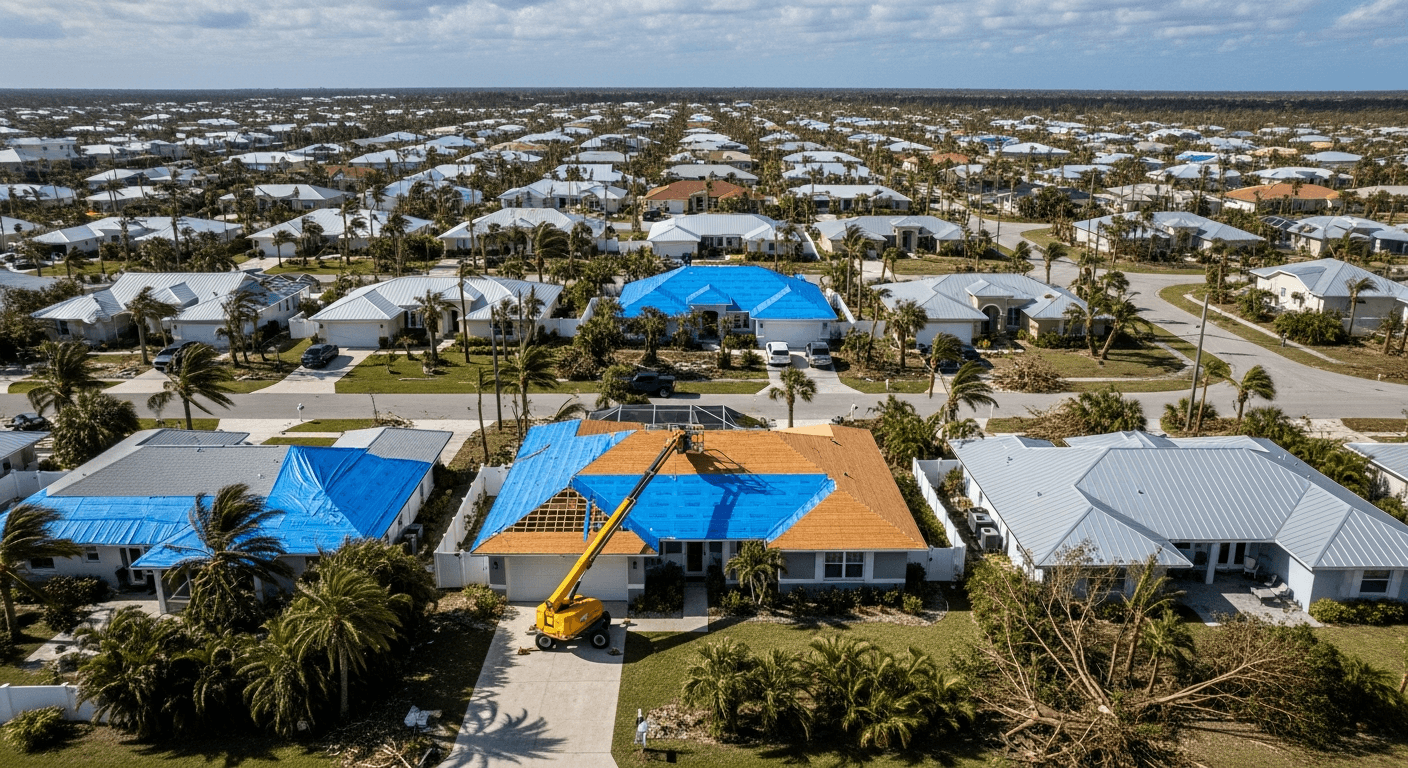
Hurricane-Damaged Houses
Citizens Property Insurance non-renewals and AOB (assignment of benefits) disputes leave thousands of FL homeowners stuck. We close even with open claims.
Learn moreTired Landlord Sale
Florida eviction timelines run 4–8 weeks for non-payment, longer for habitability disputes. We buy occupied — you walk away clean.
Learn moreMold or Water Damage
FL humidity makes mold issues compound fast. Most retail buyers walk away the moment mold is disclosed. We don't.
Learn moreWhat it sounds like to actually sell
“I live in Texas now. Byron's team flew through everything by email and FaceTime. We signed remote, the title company shipped me a check. I never even had to fly to Miami.”
Composite stories from real Florida closings. Names changed for privacy.
Miami divorce / separation sellers ask…
Selling a divorce / separation house in Miami?
Get your fair cash offer in 24 hours. No obligation.
Call (951) 331-3844