
Sell a Probate Property in Port St. Lucie? We buy Port St. Lucie houses for cash.
FL summary administration applies for estates under $75,000 (or 2+ years post-death). We can structure the contract to match your administration type. We've helped 500+ Florida sellers close in 7–14 days — Port St. Lucie included.
- $0 commissions or fees
- Close in 7 days — or your date
- No repairs, no cleanout, no showings
No obligation. 24-hour response.
Why sell a probate property sellers in Port St. Lucie call us
Carrying costs on a probate house add up fast — taxes, insurance, utilities, HOA dues. We buy Port St. Lucie houses regardless of what condition they're in or what situation you're navigating — including sell a probate property.
Retiree downsizing, out-of-state owners, vacant lots. We know the St. Lucie County market and the realities of selling under pressure here. FL summary administration applies for estates under $75,000 (or 2+ years post-death). We can structure the contract to match your administration type.
You're the Personal Representative — or the attorney for one — and the estate owns a Florida house that needs to be sold. Byron Buys Houses works directly with your probate attorney and your PR. Cash offer, no financing contingency, close on the court's timeline. Not yours.
- 15+ years buying Florida real estate
- 500+ closings across 67 FL counties
- BBB A+ accredited, 4.9 stars from 87+ Google reviews
- Closed estate sales in Formal, Summary, and Ancillary administrations
- Comfortable signing contracts contingent on Letters of Administration
- Direct line to Byron Johnson — not a wholesaler call center
Why Probate Attorneys and PRs Send Their Sales to Byron
A probate sale isn't a regular sale. The court is watching. The creditors are watching. The other heirs are watching. Anything that delays the closing — a financing fall-through, an appraisal gap, a buyer who walks during inspection — costs the estate weeks and the PR another hearing. Here's what Byron does differently.
1. We sign contracts contingent on Letters. Most cash buyers want a clean closing in 14 days. We do too — but we know that in probate, the clock doesn't start when the seller wants it to. It starts when the court issues Letters of Administration (Ch. 733) or enters an Order of Summary Administration (Ch. 735). Byron's contract is written specifically to wait on the court without holding the estate hostage to a price re-trade later.
2. Zero financing contingency. Under Para 8 of the FAR/BAR AS-IS Residential Contract (ASIS-7), Byron waives financing entirely. The estate doesn't carry appraisal risk. The PR isn't explaining to the court why a deal that looked solid at the Rule 5.370 hearing fell apart at the lender's underwriting desk.
3. We pre-fund what needs pre-funding. Filing fees for Petitions for Order Authorizing Sale, recording costs, even publication costs for §733.2121 notice to creditors when the estate's cash flow is tight — Byron can advance against closing. The estate doesn't have to choose between getting the sale done and paying the next quarter's property taxes.
4. Title work runs in parallel with probate. While your attorney is preparing the Petition for Administration, our title company is pulling chain of title, ordering the lien search, and issuing the commitment. By the time Letters issue, we're 80% to closing.
5. We coordinate with your attorney, not around them. No back-channel negotiations with heirs. Every offer letter, every counter, every closing instruction goes through your firm. The PR's fiduciary duty is protected. The attorney bills the estate normally.
6. We close on the court's clock. If the judge sets the Sale Order hearing for 45 days out, we wait 45 days. If creditor claims run long and the PR wants to escrow proceeds, we escrow proceeds. Byron has never killed a deal because the court took too long.
How a Florida Probate Sale With Byron Actually Works
A four-step roadmap from intake to disbursement. Your attorney runs probate; we run the sale.
Step 1 — Intake call with the PR or attorney. Tell us the situation: who died, when, was there a will, is the house homestead, are there minor children, are there multiple heirs, where does the PR live. Byron does this call himself — usually in 20 minutes.
Step 2 — Cash offer in 24 hours. We pull comps, factor in condition (occupied or vacant, deferred maintenance, code-enforcement liens, open insurance claims), and send a written offer to your attorney's office. The offer is firm — not a "subject to inspection" trick.
Step 3 — Contract signed contingent on PR authority. Once the PR is appointed (Letters issue) or the court enters an Order of Summary Administration, the PR signs. Byron deposits earnest money to your attorney's trust account or the title company's escrow.
Step 4 — Close on the court's schedule. Title clears, creditor period addressed, Order Authorizing Sale entered (if needed), proceeds wired to the estate account. Typical timeline from contract signing to closing: 14–45 days, depending on whether court approval is required.
The Two Tracks of Florida Probate
Under Ch. 731–735, F.S., a deceased Florida owner's real estate moves through one of two main tracks. Which track you're on determines who can sign the deed, how long it takes, and whether the court has to bless the sale.
Formal Administration (Ch. 733, F.S.)
Required when the non-exempt estate value exceeds $75,000 and the decedent died within the last two years. The court appoints a Personal Representative, issues Letters of Administration, and that PR has authority under §733.607 to take possession of estate property and convey it. Typical timeline from petition to discharge: 6–12 months, sometimes longer in contested estates.
The PR must publish notice to creditors under §733.2121 — this triggers the 3-month creditor claim period under §733.702. Most attorneys won't distribute estate proceeds until that window closes, but a sale itself can close before. Byron is comfortable with proceeds escrowed pending creditor clearance.
Summary Administration (Ch. 735, F.S.)
Available when (a) the non-exempt estate is $75,000 or less (rising to $150,000 effective July 1, 2026 under CS/HB 1337), or (b) the decedent has been deceased for more than two years. Under §735.201, the court enters an Order of Summary Administration that operates like a deed-effective release — title transfers directly to the heirs or beneficiaries named in the order. No PR is appointed. Typical timeline: 4–8 weeks.
After the order issues, the heirs sign the deed at closing. If the heirs disagree, you're back to a partition action or a negotiated buyout. Byron can buy a single heir's share and force partition under Ch. 64 — though it's faster to negotiate up front.
Disposition Without Administration (§735.301)
Reserved for tiny estates with no real property — funeral expenses, last medical bills, exempt personal property. Not applicable to a real-estate sale. If you've been told you can use Disposition Without Administration to convey a house, get a second opinion. You can't.
Ancillary Administration (Ch. 734)
If the decedent died domiciled in another state but owned Florida real estate, the FL court opens ancillary administration under §§734.101–734.104. The home-state probate handles everything else; the FL ancillary court issues either ancillary Letters of Administration or, for smaller property, an Order of Summary Administration. Byron has closed ancillary deals where the primary probate was running in New York, New Jersey, Illinois, Ohio, Texas, Georgia, Pennsylvania, Massachusetts, and California — the snowbird states.
For a non-resident PR who's already been appointed in the home state, Florida law under §733.304 still controls who can serve as the FL ancillary PR. Often a FL-licensed attorney is appointed as ancillary PR by stipulation of the heirs to avoid the residency question.
Court-Approved Sale vs. PR-Authorized Sale: Where the Line Sits
This is the question every probate attorney asks first, because it determines the closing timeline. There are three pathways under Florida law.
Pathway 1 — Power of Sale in the will. If the decedent's will expressly grants the PR a Power of Sale, the PR can sell estate real property without a separate court order. The PR signs the deed; the buyer takes title; the proceeds flow into the estate account. No Rule 5.370 petition. No hearing.
Pathway 2 — §733.612(5) statutory authority. Even without a will-granted Power of Sale, the PR has statutory authority under §733.612(5) to sell, mortgage, or lease estate property if the sale is consistent with the PR's fiduciary duty and not specifically prohibited. Most Florida probate attorneys still record a court authorization to bullet-proof title — but the statute itself provides the authority.
Pathway 3 — Petition for Order Authorizing Sale (Rule 5.370). Required when (a) the will is silent on Power of Sale and the PR or beneficiaries want belt-and-suspenders title comfort, (b) the will expressly requires court approval, (c) heirs are objecting, or (d) the sale is for less than fair market value. The PR files the petition, serves interested persons, and gets a hearing — typically 30–60 days out in Miami-Dade and Broward, faster in smaller north-Florida counties.
Court approval is mandatory in three situations: (1) homestead sales involving protected heirs, (2) sales when the PR is also a beneficiary buying from the estate (self-dealing — see §733.610), and (3) sales when the will explicitly conditions the PR's power on court approval.
Byron's contracts are written to handle any of the three pathways. We don't ask the attorney to choose a pathway that doesn't fit the estate.
Florida Homestead and the Probate Sale
Constitutional homestead under Article X §4 of the Florida Constitution is the single most important issue in a Florida probate real-estate sale. It's also the one most out-of-state attorneys miss.
Two homestead doctrines apply, and they don't overlap.
Constitutional homestead — devise restriction (Art. X §4(c)). If the decedent was survived by a spouse or a minor child, the homestead cannot be devised by will except to the spouse if there's no minor child. A devise that violates this rule is void. The homestead instead passes by operation of law: a life estate to the surviving spouse, with a remainder vested in the descendants per stirpes — or, if the spouse elects under §732.401(2), an undivided one-half interest as a tenant in common with the descendants.
The practical impact: homestead is not part of the probate estate for purposes of the PR's authority. The PR can't sell it under §733.612(5) or under a will Power of Sale. Selling homestead requires (1) a court determination of homestead status (typically as part of the probate, though sometimes a separate proceeding), (2) joinder of every protected heir on the deed — life tenant and all remaindermen — and (3) sometimes a guardian ad litem if minor children are involved.
Constitutional homestead — creditor protection (Art. X §4(a)). The decedent's homestead is protected from creditors of the estate (with narrow exceptions for property taxes, mortgages, mechanics' liens, and federal tax liens). Sale proceeds from a homestead generally retain that protection under In re Estates of Hartman and progeny — meaning unsecured creditor claims under §733.702 don't reach homestead proceeds. This matters when the estate is insolvent: a non-homestead house sells, creditors get paid; a homestead house sells, the protected heirs keep the money.
Tax homestead under §196.031. Different doctrine. The $50,000 base exemption ($51,411 for 2026) and the 3% Save Our Homes cap (§193.155) drop off at sale — Byron is reassessed at the purchase price. This affects Byron's holding cost; it doesn't affect the estate's net.
Byron's intake question one is "Was this the decedent's primary residence?" If the answer is yes, we're already running the homestead checklist before the call ends.
Working With Multiple PRs and Co-Personal Representatives
Co-PRs are common when the decedent named two adult children, or a spouse-and-child combination, or a family member plus an institutional fiduciary. Under §733.615, co-PRs generally must act jointly — meaning every co-PR must sign the contract, the deed, and any closing instruction. There are three exceptions: (1) the will or the court order specifies otherwise, (2) one co-PR is unavailable because of absence or illness and the others act in an emergency, or (3) the act is one the will or statute specifically authorizes a single PR to do.
When co-PRs disagree on sale price or terms, the deadlocked PR can petition the court for instructions under §733.603, or another interested person can move to remove a PR under §733.504. Byron's contract holds the price during this process — we don't time-bomb the offer. If the court reduces the number of PRs or substitutes one, we re-paper the contract with the new signatories.
When one co-PR lives out of state. Mail and electronic execution are fine for the contract under §117.201 (Florida's RON statute) and §695.03 (notarization). Closing the deed itself requires either a remote online notarization compliant with §117.265 or a wet-signed deed delivered by overnight to the closing table. We handle the logistics.
Out-of-State Personal Representatives — What Florida Allows
Florida is one of the strictest states on non-resident PR eligibility. §733.304 limits non-resident service to:
- A legally adopted child or adoptive parent of the decedent;
- A person related by lineal consanguinity to the decedent (parents, grandparents, children, grandchildren — direct line);
- A spouse, brother, sister, uncle, aunt, nephew, or niece of the decedent;
- The spouse of any of the above.
A non-relative friend, business partner, or out-of-state lawyer cannot serve as a Florida PR. That's a hard rule, and the clerk will reject the petition.
Practical workarounds: (1) appoint a Florida-resident relative as co-PR, (2) substitute a Florida-licensed attorney or trust company as the appointed PR with the family's consent, or (3) if the decedent was non-resident, open ancillary administration in Florida and appoint a FL-resident ancillary PR while the home-state PR continues to manage the rest of the estate.
For ancillary administration specifically, the home-state PR usually doesn't need to qualify as the FL ancillary PR — they can appoint a FL designee and receive their share of the proceeds in the home-state estate.
Byron has worked with PRs based in 38 states. The qualification question gets resolved before we sign the contract — usually by your attorney pulling in local counsel or a trust company nominee.
Why Cash Beats MLS in Probate (Every Time)
The probate court has a calendar. The creditors have a clock. The PR has a fiduciary duty. None of those things tolerate a buyer's lender re-underwriting the loan three days before closing.
Financing contingency = wasted court time. When a financed buyer walks during the appraisal contingency, the PR is back in front of the judge explaining why the Order Authorizing Sale needs to be re-noticed for a new buyer. That's another 30–60 days of carrying costs — taxes, insurance, HOA dues, code-enforcement risk, vandalism risk on a vacant house — that the estate didn't need to bear.
Inspection contingency = price re-trade. A retail buyer schedules an inspection, finds the things every Florida house has (roof age, HVAC, water heater, settlement cracks, possible Chinese drywall in 2002–2008 builds), and demands a $25,000 credit. The PR now has to either accept the re-trade or kill the deal and start over. Either way, the estate loses.
Title delays from financed deals. Lenders order title commitments through their own approved underwriters. Cash buyers can use the estate's preferred title company — which usually means the same firm that handled the probate filings, with full familiarity with the estate file.
Doc stamp and closing-cost surprises. A retail closing involves negotiated splits of doc stamps, title insurance, intangible tax on any new mortgage, lender's policy, owner's policy. Byron's cash close on the FAR/BAR AS-IS contract is a single page of closing costs — seller pays doc stamps (§201.02), customary owner's policy split per county (seller pays in Miami-Dade, Broward, Sarasota, Collier; buyer pays elsewhere), and that's it.
The retail upside that doesn't exist in probate. PRs sometimes get pressured by heirs to "list it on MLS and get top dollar." In a stable market with a well-maintained, vacant, occupied-when-it-shows house, MLS can outperform cash — by 5–10% gross, less 6% commission, less 2–3% concessions, less 2 months of carrying cost, less the risk premium of a financing fall-through. By the time you net it out, the gap is usually 0–3%. And the timeline is 90–180 days instead of 14–45.
The math on probate is rarely about the last 3%. It's about closing the estate, paying the creditors, and distributing to the heirs while everyone is still on speaking terms. Cash does that.
Florida Statutes That Govern a Probate Sale (Quick Reference)
This is a working reference for your file — not legal advice. Your attorney has the full code.
- Ch. 731, F.S. — Probate Code: General Provisions. Definitions, jurisdiction, venue.
- Ch. 732, F.S. — Probate Code: Intestate Succession and Wills. §732.103 (intestate share); §732.4015 (homestead devise restriction); §732.401 (spouse's elective interest in homestead).
- Ch. 733, F.S. — Probate Code: Administration of Estates. §733.304 (non-resident PR); §733.504 (removal of PR); §733.603 (PR duty); §733.607 (PR power over property); §733.610 (self-dealing); §733.612(5) (PR statutory power of sale); §733.613 (sale of real property — court authorization); §733.615 (co-PR joint action); §733.702 (3-month creditor claim period); §733.2121 (notice to creditors).
- Ch. 734, F.S. — Probate Code: Florida Probate for Non-Residents and Aliens. §§734.101–734.104 (ancillary administration).
- Ch. 735, F.S. — Probate Code: Small Estates. §735.201 (summary administration eligibility and effect); §735.301 (disposition without administration).
- Florida Probate Rule 5.370 — Sale of Real Property. Required content of petition, notice to interested persons, hearing standard.
- Article X §4, FL Constitution — Homestead. Subsection (a) creditor protection; subsection (c) devise restriction.
- §201.02, F.S. — Doc stamps on deed. $0.70/$100 statewide; $0.60/$100 + surtax in Miami-Dade.
- §689.261, F.S. — Mandatory tax-reassessment disclosure to buyer.
Document Checklist for the Closing File
Your attorney will assemble most of these — Byron's title company will request them.
- Certified death certificate (long form preferred for any homestead determination)
- Original will (if any) — filed with the clerk under §732.901 within 10 days of death
- Petition for Administration (Formal) or Petition for Summary Administration (Summary)
- Letters of Administration (Formal) or Order of Summary Administration (Summary)
- Oath of Personal Representative and Designation of Resident Agent (Formal)
- Notice to Creditors — first publication tear-sheet plus DBR §733.2121 search affidavit
- Inventory (Form 1.910) — filed within 60 days of issuance of Letters
- Order Determining Homestead Status (if homestead)
- Petition for Order Authorizing Sale and Order Authorizing Sale (if Rule 5.370 pathway)
- PR's affidavit confirming no objections to sale (if non-court pathway)
- Estate's tax ID (EIN) for closing-statement issuance
- Closing statement signed by PR; deed in PR's representative capacity
For ancillary, add: certified copy of the home-state Letters/Order; certified copy of the home-state will (if any); ancillary Petition; ancillary Letters or Order of Summary Admin.
What Sets Byron Apart for Probate Sales
- Byron Johnson signs every contract personally — not a buyer rep, not a wholesaler
- 100+ Florida probate closings — Formal, Summary, Ancillary
- We pay all standard closing costs except doc stamps (customarily seller's)
- No buyer's premium, no admin fee, no junk closing costs
- Our title company has handled probate-sale closings in 67 FL counties
- We coordinate with your attorney's preferred title company if you have one
- Earnest money to the trust account of the estate's attorney, not a third-party escrow company
- Reference letters available from FL probate attorneys we've closed with
- BBB A+, 4.9 stars from 87+ Google reviews
(See structured FAQs above.) Byron answers everything from "do we need to wait for Letters" to "what about a life estate where the life tenant won't sign" — directly with your probate attorney, on a single phone call.
Florida-Specific Probate Sale Hooks (For Your File)
Homestead pre-screen. Art. X §4 controls. If the decedent was survived by a spouse or minor child, homestead doesn't pass through the probate estate — it goes to protected heirs by operation of law. The PR generally lacks authority to sell it without joinder of every protected heir and a court determination of homestead status. Byron's intake checks this on every file.
Creditor period under §733.702. 3 months from first publication of notice to creditors. Most attorneys hold proceeds in escrow until the period closes, even when the sale itself closes earlier. We don't ask for early disbursement.
Doc stamps under §201.02. $0.70 per $100 of consideration statewide; $0.60 + surtax in Miami-Dade. PR signs as fiduciary; tax is paid at closing.
Letters of Administration as the trigger. Under §733.607, the PR's authority dates from issuance of Letters — not from the death, not from the petition, not from the will's filing. Byron's contract is written to wait for Letters.
Summary Administration's $75K threshold. Rising to $150K on July 1, 2026, under CS/HB 1337. If the decedent has been gone more than two years, the threshold doesn't matter — Summary is available regardless of value. (Current as of May 2026.)
Non-resident PR rule under §733.304. Strict. Only specified relatives can serve as a non-resident PR. A non-relative out-of-state friend or business partner can't, even if the will names them.
Ready to Sell a Florida Probate House?
Have your probate attorney call us, or call us first and we'll loop them in. Either way works. The intake takes 20 minutes; the offer comes back in 24 hours; the contract is drafted to fit the probate pathway your attorney has chosen.
We've closed Formal Administration sales in Miami-Dade, Broward, Palm Beach, Hillsborough, Pinellas, Orange, Duval, and 23 other counties. We've closed Summary Administration sales in 4–6 weeks from petition to deed. We've closed Ancillary Administration sales for PRs in 9 different home states.
Byron Johnson — 951-331-3844. Speak directly to the buyer. Send the address, send the case caption, send the attorney's contact info. Cash offer back in 24 hours.
We work directly with your probate attorney and Personal Representative. Always have, always will. No back-channels, no end-runs around counsel, no pressure on heirs. Just a clean cash close on the court's timeline.
More situations we handle in Port St. Lucie
If your situation isn't on the list, call us. There's a good chance we've handled it.

Stop Foreclosure
Florida is a judicial-foreclosure state. From lis pendens to final judgment averages 8–12 months — but you only have until the courthouse sale to sell. We close before the sale date.
Learn more
Sell an Inherited House
Florida probate (Ch. 731–735) can take 6–12 months for formal administration. We can sign now and close once Letters of Administration are issued.
Learn moreSell a Probate Property
FL summary administration applies for estates under $75,000 (or 2+ years post-death). We can structure the contract to match your administration type.
Learn more
Sell During Divorce
Florida is an equitable-distribution state under FL Statute Ch. 61. A clean cash sale gives both parties certainty and avoids months of MLS uncertainty.
Learn moreBehind on Property Taxes
FL tax certificates sell every June 1. After 2 years (FL Statute 197), the certificate holder can apply for a tax deed — and your home goes to auction.
Learn moreCode Violation Properties
FL code-enforcement fines accrue daily — often $250+/day per violation — and become liens on the property until paid or settled.
Learn more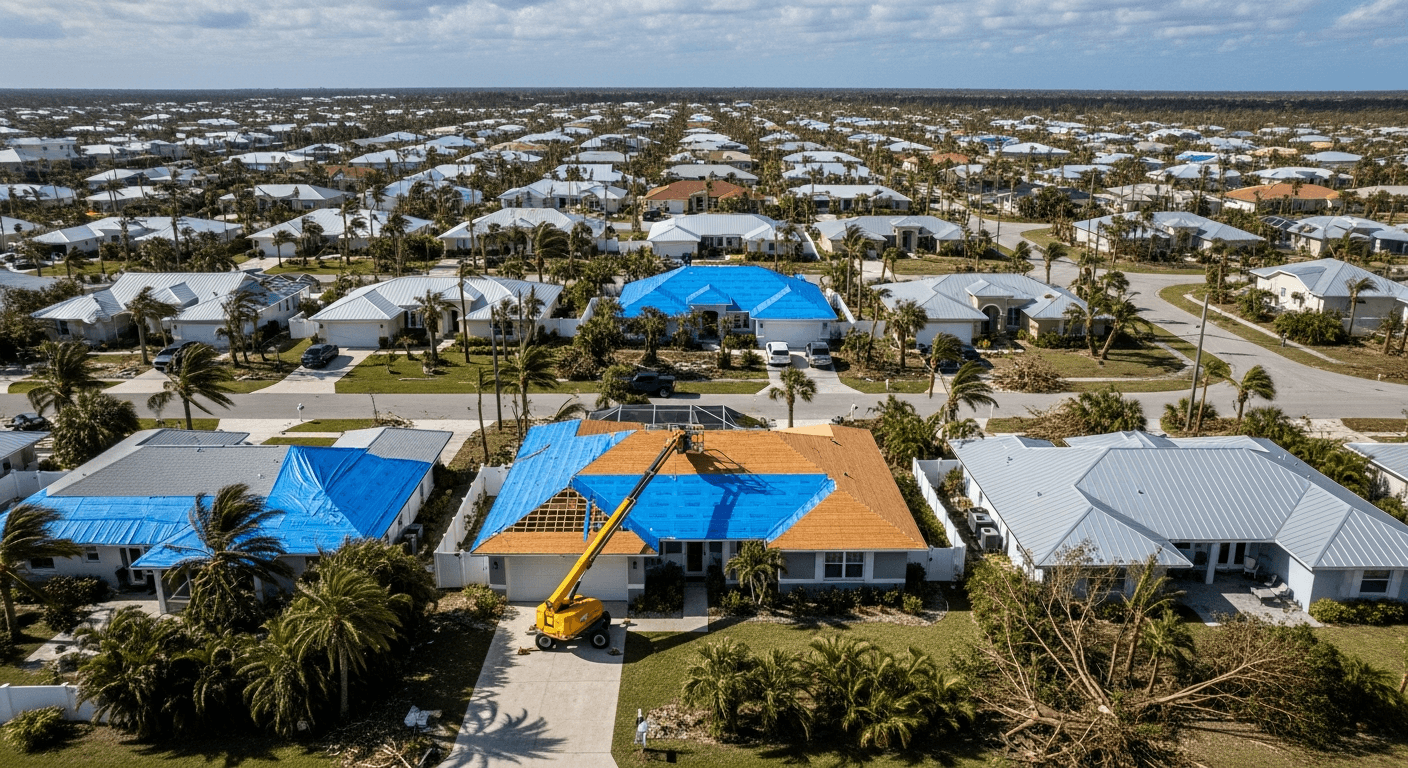
Hurricane-Damaged Houses
Citizens Property Insurance non-renewals and AOB (assignment of benefits) disputes leave thousands of FL homeowners stuck. We close even with open claims.
Learn moreTired Landlord Sale
Florida eviction timelines run 4–8 weeks for non-payment, longer for habitability disputes. We buy occupied — you walk away clean.
Learn moreMold or Water Damage
FL humidity makes mold issues compound fast. Most retail buyers walk away the moment mold is disclosed. We don't.
Learn moreWhat it sounds like to actually sell
“I live in Texas now. Byron's team flew through everything by email and FaceTime. We signed remote, the title company shipped me a check. I never even had to fly to Miami.”
Composite stories from real Florida closings. Names changed for privacy.
Port St. Lucie probate sale sellers ask…
Selling a probate sale house in Port St. Lucie?
Get your fair cash offer in 24 hours. No obligation.
Call (951) 331-3844